KalPay
Head of Operations
The diagnostic found the constraint in our data, not our software. The build that followed was half the scope we had budgeted.Read the KalPay case study
Applied AI · Mid-Market
We design and build software and AI systems anchored to constraints in process, data and unit economics, the three pillars that decide whether a technology implementation shows up in the P&L.
01
50 +
Companies across 7 countries
02
80 +
Products shipped
03
$100M +
Cumulative P&L impact
Clients
KalPay
Head of Operations
The diagnostic found the constraint in our data, not our software. The build that followed was half the scope we had budgeted.Read the KalPay case study
Musavir AI
Arslan, CEO
Senior engineers from the first call to the last release. There was no handover, and nothing was lost in one.
AHW Global
Jordan, United States
KalTech has been a valued partner for us this past year. They have provided intelligent solutions for our needs.Read the AHW Global case study
Balloons
Mr. Alsulaiman, Founder, Saudi Arabia
KalTech helped us scale from 100 to 10,000+ leads without changing our ops headcount. Their speed, UX, and automation changed the game.
Muawin
Hashim, Co-founder, Pakistan
KalTech developed a robust, AI-enhanced loan management platform for us. Their ability to integrate intelligent automation helped us streamline decision-making and launch faster.
Teams we have built and shipped for








Our Method
A brief specifies a solution that has already been chosen. It rarely establishes that the solution addresses the constraint the business is actually operating under. KalTech identifies that constraint first, across process, data and unit economics.
01
Process
Software applied to undefined work produces an unreadable result. We establish whether the work, and the systems it currently runs through, are specified tightly enough to be encoded before anything is scoped.
We ask: Could two people perform this work and produce the same result?
02
Data
Most integration failures are definitional rather than technical. We establish whether the business holds one definition of a customer, an order or a case, or several definitions that disagree.
We ask: Could two systems answer the same question and return the same number?
03
Unit Economics
A system carries a maintenance cost that is rarely priced at scoping. We establish the volume at which it pays for itself, and whether the business operates above that line.
We ask: What does this cost to run in year two, and at what volume does it clear it?
The diagnostic runs against the three lenses. It ends in a written finding and a scope priced against it. Companies that proceed to a build do so with the constraint already established. Companies that do not proceed keep the finding.
01
Diagnostic
Companies with a functioning business and a specific commercial problem.
02
Written finding
03
Scope
Nothing built
Sometimes the finding is that nothing should be built. We deliver that as readily as any other.
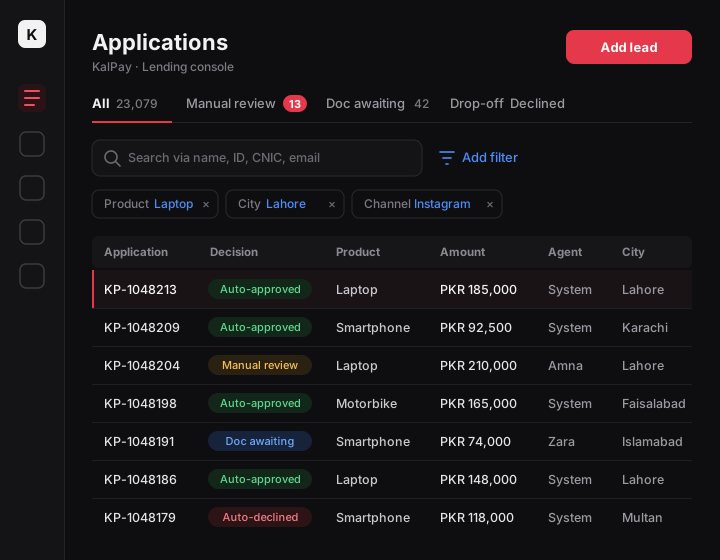
Constraint found — Process
Regulated consumer lending · BNPL and device financing
60%
Decisions returned without manual review
Read the KalPay case study
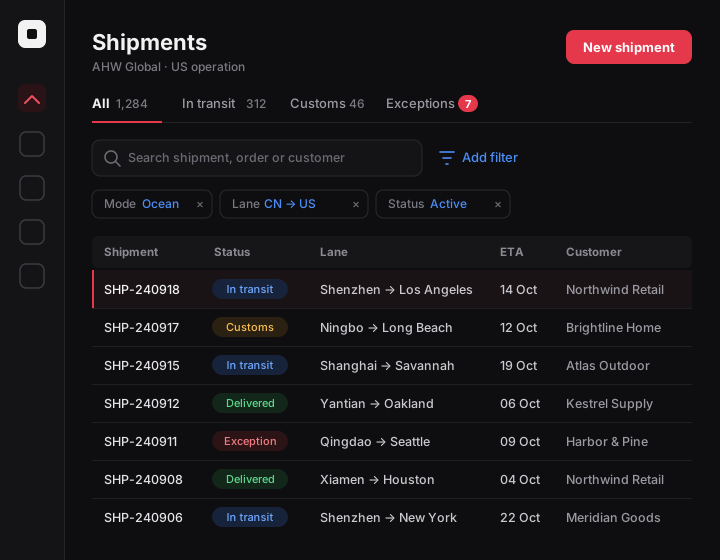
Constraint found — Data
Logistics and cross-border shipping · US operation
4–6 hrs
Processing time recovered daily
Read the AHW Global case study
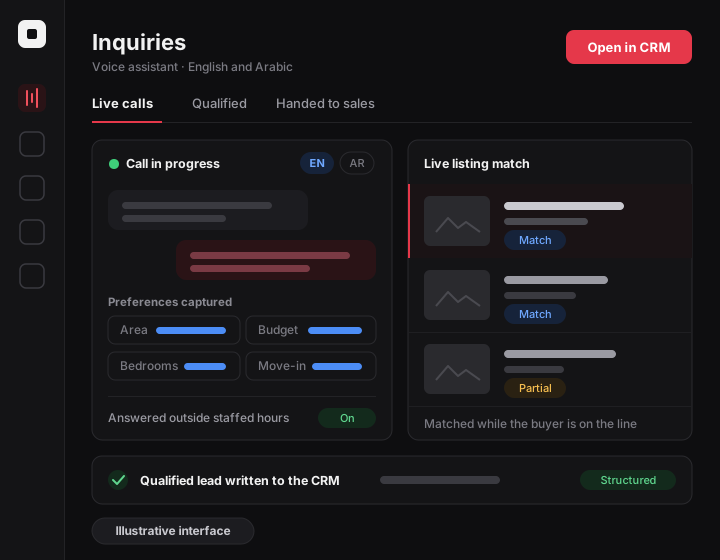
Constraint found — Unit Economics
Property technology · UAE market
~65%
Reduction in manual call handling time
Read the UAE property platform case study
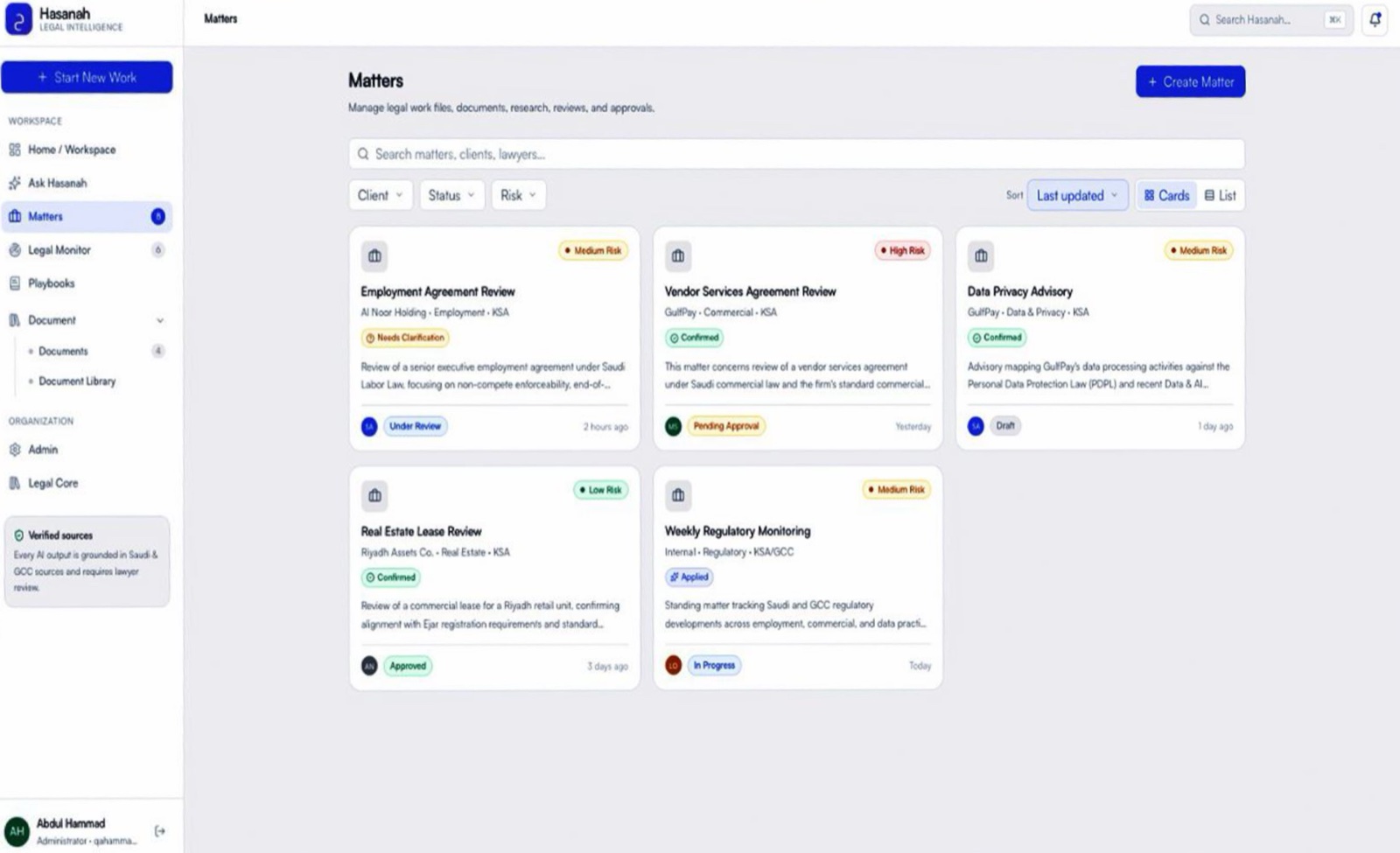
Constraint found — Data
Legal technology · Saudi law
8 hrs
Saved per case
Read the Hasanah case study
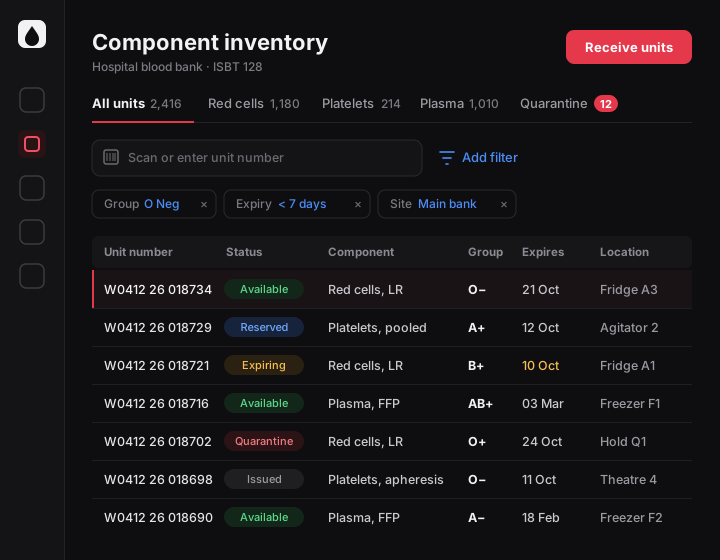
Constraint found — Process
Hospital blood bank operations · ISBT 128 compliant
100%
Unit traceability, donor to patient
Read the BECS case study
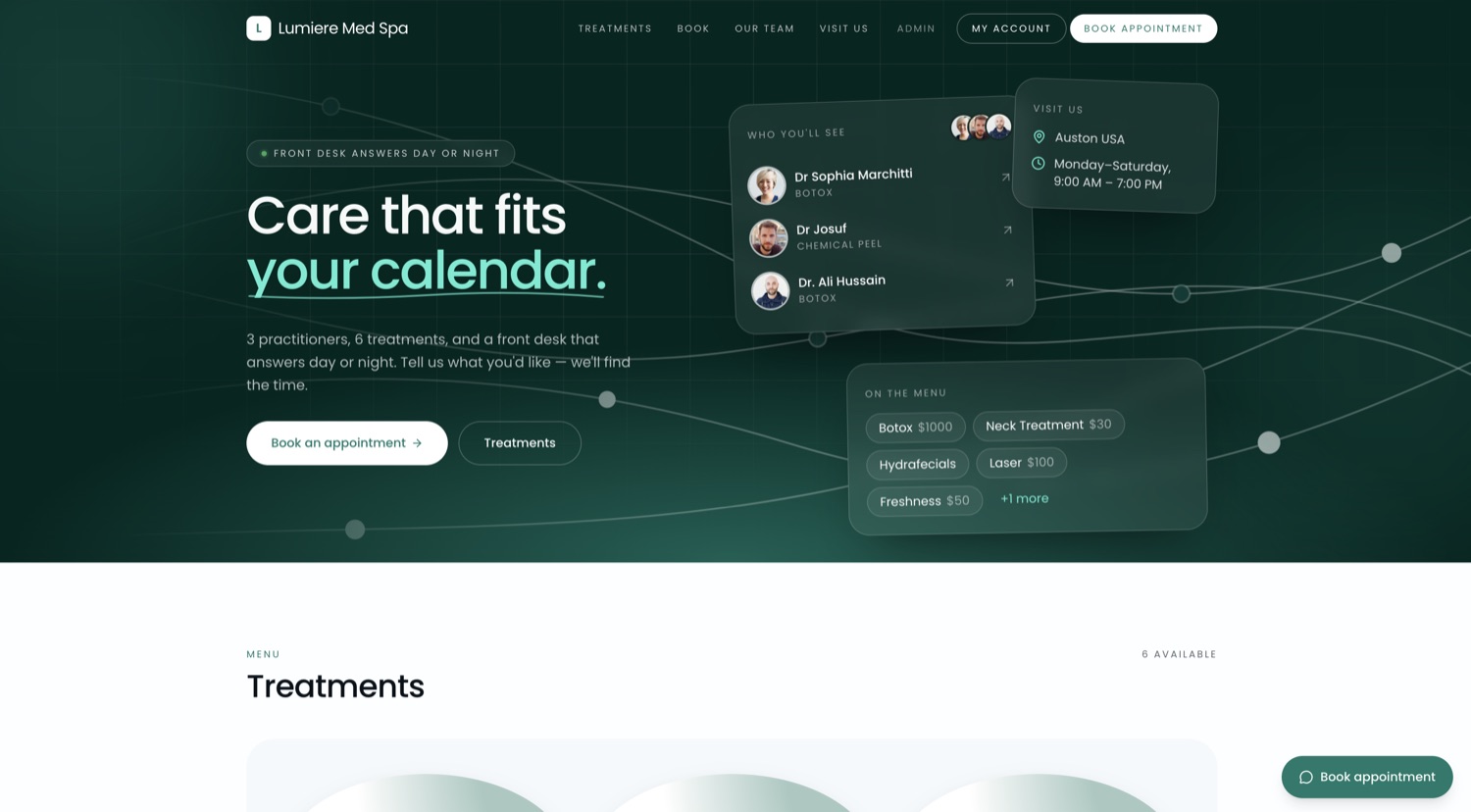
Constraint found — Process
Aesthetic clinics · HIPAA compliant
$120,000
Reduction in admin costs, per year
Read the US aesthetic clinic case study
Services
The same firm that scopes the work ships it. That is the whole of the accountability claim, and it is why there is no handover between a strategy team and a delivery team.
We establish what should be built and what should not. This covers the diagnostic, architecture decisions, build-versus-buy calls, and the sequencing of a roadmap against payback rather than ambition. It ends in a written finding and a scope, not a deck.
We build and ship production systems. Platforms, internal tooling, integrations, applied AI where it earns its place.
We work alongside operators through a change that spans more than one system. Migration off legacy platforms, consolidation of fragmented data, and the operating decisions that come with both.
Frontier work moves faster than any delivery cycle. We track it, test the parts that claim a production benefit, and publish what held. Most of it does not. The value is knowing which.
Bench Test
Where retrieval holds up, where tuning earns its cost, and the volume at which that answer flips.
Start Here
For companies operating above $1M in revenue with a specific commercial problem.
A 30-minute call. You describe what you are considering building. We tell you which of the three lenses we would run it through first, and whether we are the right firm for it. No fee, no deck, no follow-up sequence.